
The decision to start an Asterisk to FreeSWITCH Migration rarely begins in a planning meeting. It often starts when an on-call engineer faces a production issue, such as stalled calls or dropped connections during high traffic. It can also happen when your product team needs real-time AI voice bot integration, but the existing system cannot support it easily. Another common reason is the need to handle more concurrent calls with less infrastructure.
Asterisk to FreeSWITCH Migration is not just a configuration change. It is a major shift in how your VoIP platform manages call state, concurrency, media processing, and external integrations. With the right architecture, you can build a system that scales more predictably and supports AI workloads more efficiently. A rushed migration, however, can lead to production issues and ongoing maintenance challenges.
The demand for modern real-time communication is also growing rapidly. According to a report, the global WebRTC market was valued at USD 9.56 billion in 2025 and is projected to reach USD 122.08 billion by 2034, growing at a CAGR of 32.21%. This growth highlights the increasing need for VoIP platforms that can support WebRTC, real-time communication, and modern voice applications.
This growth is increasing the need for modern VoIP platforms that can support AI, WebRTC, omnichannel voice, and real-time analytics. This blog explains how to complete an Asterisk to FreeSWITCH Migration smoothly while keeping your VoIP traffic running.
Why Companies Are Walking Away from Asterisk
Asterisk has more than 25 years of production history. That is a significant advantage. It is why many VoIP developers learned telephony with Asterisk and why many VoIP platforms still use it today. However, the architecture that made Asterisk a leading open-source PBX in the early 2000s can create challenges when modern platforms need to handle large-scale, high-concurrency workloads.
One major challenge is call state management. As the number of active channels increases, resource usage and concurrency become more difficult to manage. During traffic spikes, this can lead to higher CPU usage, call drops, or system slowdowns. When these issues happen repeatedly, restarting the system may provide temporary relief, but it does not address the underlying scalability challenge.
Asterisk can also require additional development work for modern use cases. Integrating a real-time AI voice bot, sentiment analysis, or a WebRTC media bridge may require custom solutions and careful integration with the existing architecture. These requirements can make it harder to evolve a VoIP platform for newer voice technologies.
Companies considering an Asterisk to FreeSWITCH Migration are therefore looking beyond simply replacing one telephony platform with another. They want a VoIP architecture that can better support high concurrency, real-time media processing, AI integrations, WebRTC, and other modern workloads.
The goal is not to move away from Asterisk simply because FreeSWITCH is newer. The goal is to choose an architecture that better matches the performance, scalability, and integration requirements of a modern VoIP platform.
Asterisk vs FreeSWITCH: What the Architecture Actually Looks Like
The Asterisk vs FreeSWITCH comparison is often reduced to one point: “FreeSWITCH handles more concurrent calls.” While concurrency is an important difference, the real reason comes from how both platforms are designed.
Asterisk uses a channel-based architecture where call channels and their related resources are managed within the core system. As traffic increases, scaling may require additional Asterisk instances, which can add complexity when managing multiple servers and coordinating calls.
FreeSWITCH is designed with a different approach to call handling and resource management. Its architecture provides greater isolation between call sessions and is designed to handle high levels of concurrency efficiently. This can help reduce the impact of heavy traffic on other active calls and make the platform easier to scale for demanding VoIP workloads.
The difference becomes more important as your platform needs to support high call volumes, real-time media processing, AI voice applications, and WebRTC.
The table below compares the core components and architectural differences between both systems:
| Asterisk Component | FreeSWITCH Equivalent | Key Operational Difference |
| extensions.conf | XML Dialplan / mod_lua / mod_xml_curl | Asterisk processes lines sequentially; FreeSWITCH compiles into an in-memory regex tree |
| sip.conf / pjsip.conf | sofia.conf.xml (Profiles and Gateways) | FreeSWITCH separates internal and external SIP boundaries into distinct profiles |
| AGI (Asterisk Gateway Interface) | ESL Outbound (Event Socket Layer) | AGI forks a new OS process per call; ESL pipes a TCP stream to an async listener |
| AMI (Asterisk Manager Interface) | ESL Inbound | AMI requires constant polling; FreeSWITCH sends async JSON events over TCP sockets |
| CEL / CDR Records | mod_xml_cdr / mod_cdr_csv | FreeSWITCH produces full JSON call detail per leg including jitter and packet stats |
Understanding these mappings is the first step in any serious Asterisk to FreeSWITCH Migration plan. You are not simply moving configuration files. You are redesigning how call control, signaling, and application logic work together.
When Asterisk to FreeSWITCH Migration Makes Business Sense
Not every VoIP platform needs to migrate. For some environments, staying with Asterisk may still be the right choice. However, certain signs can indicate that an Asterisk to FreeSWITCH Migration is worth considering:
- Your platform regularly handles more than 500 concurrent channels and experiences stability or performance issues during peak traffic.
- You need to integrate real-time AI services, voice bots, or speech analytics directly into the call flow.
- Your team spends significant time on custom Asterisk development to address performance, scalability, or concurrency challenges.
- You’re building a multi-tenant VoIP platform that requires better isolation and efficient processing for different tenants.
- Your product roadmap includes WebRTC, AI IVR, or omnichannel voice features that require flexible media handling.
- Your current setup requires multiple Asterisk clusters to manage increasing traffic and call volumes.
These signals do not automatically mean you need to migrate. They indicate that it may be time to evaluate whether your current architecture can support your platform’s future performance, scalability, and integration requirements.
People Also Read: FreeSWITCH Development Services: Take a Deep Dive to Unveil Its True Potential
If more than two of these signs apply, it may be time to start planning your Asterisk to FreeSWITCH Migration. The migration requires time and resources, but investing in the right architecture can reduce the ongoing cost and complexity of working around scalability and performance limitations.
Zero-Downtime Migration Strategy: Keeping Traffic Live

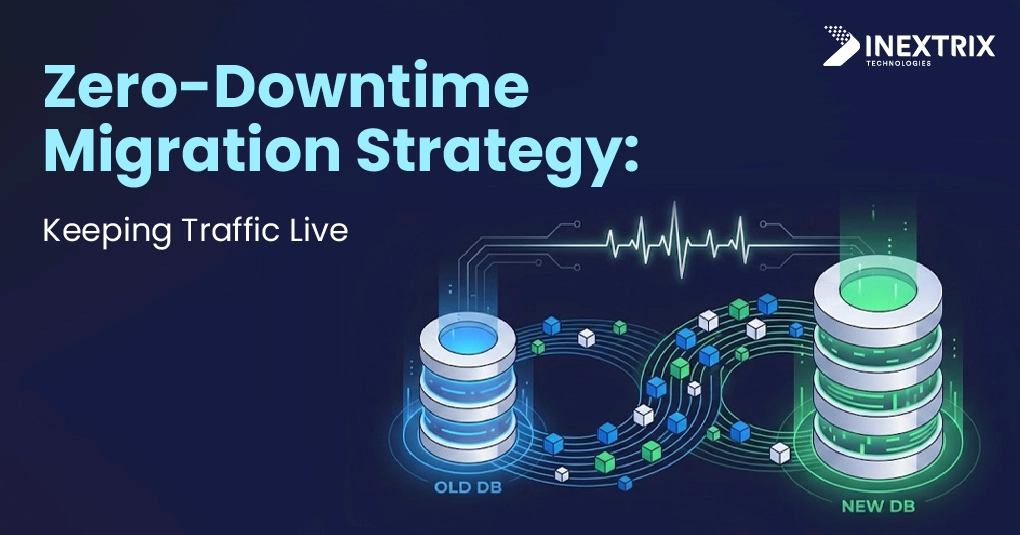
The biggest concern in any Asterisk to FreeSWITCH Migration is downtime. Telephony platforms cannot always use maintenance windows like web applications can because live calls need to stay connected. A parallel migration approach can help keep traffic running while you gradually move users to FreeSWITCH.
Step 1: Insert an Edge Proxy Layer
Before making changes to Asterisk, place an edge proxy such as OpenSIPS or Kamailio upstream of your existing system. The proxy manages inbound registrations and carrier routing.
Once the proxy is active, you can route traffic between Asterisk and FreeSWITCH at the proxy level without changing the configuration of phones, softphones, or carrier connections.
Step 2: Build an Internal SIP Bridge
Set up your FreeSWITCH cluster and connect it to Asterisk through a dedicated internal SIP trunk. This bridge allows calls to move between both systems during the migration.
For example, a user still running on Asterisk can call an extension that has already moved to FreeSWITCH. The transition remains seamless for the users.
Step 3: Migrate Traffic in Controlled Phases
A phased approach reduces migration risk. Move traffic in small batches and monitor the system at every stage:
- Ghost Loop: Route test DIDs and synthetic traffic through FreeSWITCH to verify media paths, codec negotiation, and audio quality before moving real users.
- Pilot Group: Move one low-risk tenant, internal department, or small DID range to FreeSWITCH. Run it for 7 to 10 days under real traffic conditions.
- Incremental Scaling: Increase FreeSWITCH traffic in 10% to 25% increments while monitoring CPU utilization, event queue depth, call quality, and media performance.
- Asterisk Wind-Down: Once FreeSWITCH is handling production traffic reliably, gradually reduce and eventually decommission the Asterisk cluster.
The key is to avoid a single large cutover. A phased migration lets you keep production traffic active, identify issues early, and move users to FreeSWITCH with minimal disruption.
Migrating Dialplans, Media, and CDR Data Without Losing Coverage
Moving content between Asterisk and FreeSWITCH is one of the most time-consuming parts of the migration. Three areas require careful planning: dialplans, media files, and CDR data.
1. Dialplan Translation
Asterisk dialplans are sequential and run from top to bottom based on priority numbers. FreeSWITCH uses a declarative XML structure that is loaded into memory and uses regex matching.
Because of these differences, you cannot simply copy an Asterisk dialplan into FreeSWITCH. Each route, condition, and application call needs to be rewritten in the FreeSWITCH format.
For platforms with large dialplan libraries, custom FreeSWITCH development can simplify the process. A team with FreeSWITCH experience can use mod_xml_curl to serve dialplans dynamically from your existing database instead of manually rewriting every route into static XML.
People Also Read: Custom FreeSWITCH Module Development: When Configuration Isn’t Enough
2. Media File Handling
Asterisk commonly uses 8kHz mono audio prompts. FreeSWITCH supports multiple audio rates, including up to 48kHz. While 8kHz prompts can work on FreeSWITCH, converting them before deployment can help optimize media processing and reduce unnecessary processing during calls.
A practical approach is to batch-convert your prompt library to 16kHz or 32kHz before deployment. Tools such as SoX can handle bulk audio conversion and make the process easier.
3. CDR and Billing Data
FreeSWITCH can provide detailed call records with information such as packet counts, jitter, codec details, and call timing. Simply mapping this data into an existing Asterisk CDR schema may result in lost information or inaccurate billing reports.
A better approach is to use mod_xml_cdr with an asynchronous HTTP receiver. You can then create a normalization layer that extracts the fields required by your billing system and stores them in your database.
This approach keeps media processing and billing workflows separate and helps prevent database write latency from affecting call performance during peak traffic.
Custom FreeSWITCH Development for an AI-Ready VoIP Platform

This is where the architectural shift can deliver real value. Once your VoIP platform runs on FreeSWITCH, the Event Socket Layer (ESL) makes it easier to connect AI services and external applications.
ESL Outbound connections allow call logic to run in external microservices built with Python, Node.js, or Go. This means your AI voice bot, sentiment analysis engine, or real-time transcription service can operate outside the FreeSWITCH core. FreeSWITCH manages signaling and media, while the external service handles the AI and application logic.
Custom FreeSWITCH development can help make your platform AI-ready in several areas:
- AI Voice Bot Integration: Connect call flows to ESL Outbound services that work with AI voice agents, manage turn-taking, and handle audio streams without blocking the core media path.
- Real-Time Transcription: Send media streams to speech-to-text services through WebSocket connections while FreeSWITCH continues managing the SIP session.
- Dynamic AI-Powered Routing: Use mod_xml_curl to connect call routing with an AI-powered engine. This can support context-based decisions using caller history, intent, or queue load.
- WebRTC Media Handling: FreeSWITCH supports WebRTC, making it easier to build browser-based calling, video escalation, and screen-sharing features.
- Sentiment Analysis Integration: Send audio streams to external analysis services in real time and return results to agent dashboards without disrupting the call.
Each of these use cases requires proper development and integration. FreeSWITCH provides the foundation, while Custom FreeSWITCH Development helps turn that foundation into a scalable, AI-ready VoIP platform.
When Custom Asterisk Development Is the Right Short-Term Move
Not every team is ready to complete an Asterisk to FreeSWITCH Migration immediately. In some cases, the best first step is Custom Asterisk Development to stabilize or improve the existing system before starting the migration.
Scenarios Where This Makes Sense
- You have a production stability issue that needs to be fixed before traffic can be safely migrated.
- Your dialplan depends heavily on custom AGI scripts that need to be refactored before they can be moved to ESL.
- Your team needs time to build FreeSWITCH expertise before managing a new production cluster.
- Your migration is planned 6 to 12 months from now, and the current Asterisk platform needs to remain stable until then.
- You use niche Asterisk modules or DAHDI hardware integrations that require additional engineering before FreeSWITCH can replace them.
In these situations, Custom Asterisk Development can provide time to prepare for the migration without adding unnecessary technical debt. However, it should be treated as a temporary bridge rather than a long-term solution.
Any Asterisk development completed during this phase should be well documented and designed with the eventual Asterisk to FreeSWITCH Migration in mind.
How Inextrix Developers Handle Asterisk to FreeSWITCH Migration
Inextrix has over 16 years of production experience with FreeSWITCH, OpenSIPS, Asterisk, and Kamailio deployments. This experience is especially valuable in the areas where migrations can face challenges, including dialplan edge cases, CDR schema conflicts, codec negotiation issues, and ESL integration problems.
Every Asterisk to FreeSWITCH Migration project at Inextrix starts with an architecture audit of the existing Asterisk deployment. The audit reviews active modules, dialplan complexity, peak concurrent channels, and external integrations. This information is then used to create a migration plan, timeline, and phased approach based on the specific platform requirements.
Development Work Includes
- Edge proxy deployment: Set up the edge proxy and configure SIP bridging between Asterisk and FreeSWITCH.
- Dialplan translation: Convert existing dialplan logic and design the FreeSWITCH XML architecture.
- Custom FreeSWITCH development: Build AI integrations, WebRTC bridges, and dynamic routing solutions.
- CDR and billing migration: Normalize CDR data and maintain billing continuity during and after the migration.
- Load testing: Use SIPp, media loopback testing, and DTMF integrity checks to validate the system before cutover.
- Post-migration support: Monitor the new platform and provide ongoing technical support.
The goal is not simply to move from Asterisk to FreeSWITCH. The goal is to build a VoIP platform that is more scalable, reliable, and ready for future requirements after the Asterisk to FreeSWITCH Migration is complete.
Conclusion:
Asterisk to FreeSWITCH Migration is not a quick fix. It is a planned architecture shift that can give your VoIP platform better concurrency, AI integration, and media processing capabilities for modern voice services.
A successful migration uses a parallel approach with phased traffic shifts and proper testing. Custom FreeSWITCH development can help add AI-ready features, while Custom Asterisk Development can serve as a controlled short-term solution when the existing platform needs to remain stable before migration.
The goal is to build a VoIP platform that can handle your current call volume while also supporting future growth, AI, WebRTC, and real-time voice applications.
If you’re evaluating whether an Asterisk to FreeSWITCH Migration is right for your platform, start with an architecture audit. This helps identify your current limitations, migration requirements, and the best path forward. Talk to the Inextrix team to discuss your requirements and plan your migration.