
Telecom service providers often face a key architecture question: should they build their platform around a Class 5 Softswitch or an IP PBX? At a basic level, both handle VoIP calls. However, they are designed for different purposes.
The Class 5 Softswitch vs IP PBX decision mainly depends on who the platform is designed to serve. A Class 5 Softswitch manages large numbers of subscriber accounts, supports billing and service provisioning, and handles calls across a carrier network. An IP PBX is designed for businesses and manages internal extensions, call routing, voicemail, auto-attendant, and other business communication features.
They are not competing solutions. They serve different needs within the telecom stack. This article explains the Class 5 Softswitch vs IP PBX difference, what each platform is designed to do, and where each one fits in a production environment.
According to a market research, the global IP Softswitch System market was valued at USD 1,318.06 million in 2024 and is projected to reach USD 2,184.66 million by 2032, growing at a CAGR of 6.52% from 2025 to 2032.
What Is a Class 5 Softswitch?
A Class 5 Softswitch is a software-based switching system that performs the role of a traditional Class 5 central office switch in a telecom network. In the PSTN, a Class 5 switch served local subscribers and was the switch closest to the end user.
In an IP-based network, a Class 5 VoIP Softswitch performs a similar role without dedicated switching hardware. It manages subscriber registration, call origination and termination, service provisioning, billing integration, and real-time call routing through software.
The name comes from the Bell System classification. Class 5 switches handled subscriber connections, while Class 4 switches handled trunk routing between carriers. A Class 5 Softswitch continues to serve the subscriber-facing layer, but uses IP technology, programmable routing, flexible billing, and software-based service provisioning for each subscriber account.
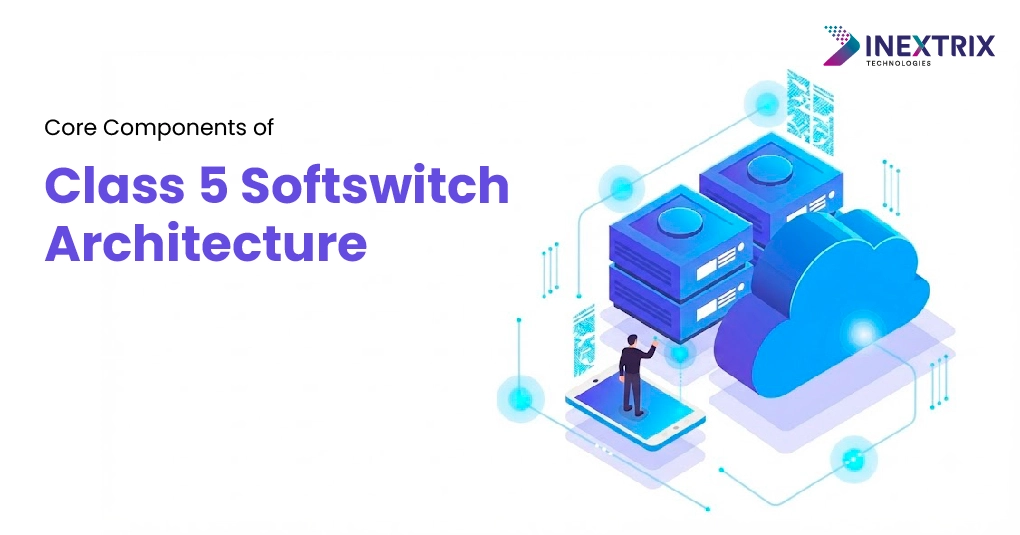
Core Components in Class 5 Softswitch Development

For telecom service providers, Class 5 Softswitch development usually involves building and integrating several components:
- Session Border Controllers (SBCs): Handle signaling security and NAT traversal at the network edge.
- Media servers: Support features such as conferencing, voicemail, IVR, and transcoding. FreeSWITCH is commonly used for this role.
- Billing engines: Connect with call detail records (CDRs) to manage accounts and billing in real time.
- Subscriber provisioning interfaces: Provide web and API access for creating and managing subscriber accounts.
- Load balancing and clustering: Help provide high availability, distribute traffic, and support automatic failover.
- Number management systems: Manage DID allocation, number porting, and routing for individual subscriber accounts.
Platforms such as FreeSWITCH are commonly used as the media engine in a Class 5 Softswitch solution. OpenSIPS or Kamailio can handle SIP proxy and routing at scale. Separating signaling from media processing makes the architecture more flexible and allows each layer to scale independently.
What Is an IP PBX?
An IP PBX (Private Branch Exchange) is a business phone system that manages calls for one organization. The word “private” is important because an IP PBX is designed for a single business or tenant rather than multiple subscribers across a carrier network.
Multi Tenant IP PBX solution manage extensions, ring groups, call queues, IVR menus, and voicemail for employees within a company or campus. They can connect to the PSTN or a SIP trunk for external calls, but their routing and features are mainly designed for internal business communication.
In the IP PBX vs Softswitch comparison, the main difference is who each system serves. An IP PBX is generally designed for one organization. A business VoIP Softswitch, especially a Class 5 deployment, is designed to support multiple tenants and can serve hundreds or thousands of business customers or residential subscribers from shared infrastructure.
Common IP PBX platforms include:
- FreePBX or Asterisk: Often used for smaller business deployments.
- FusionPBX: Used by hosted PBX providers serving multiple business clients.
- 3CX, Avaya, or Cisco: Common options for larger enterprise deployments.
Class 5 Softswitch Features
Class 5 Softswitch features are built for telecom service providers rather than internal business phone systems. This is one of the main differences between a Class 5 platform and an IP PBX.
Core Class 5 Softswitch features required for a carrier-grade deployment include:
- Multi-tenant subscriber management: Manage large subscriber bases with individual feature settings, routing rules, and billing plans.
- Real-time billing integration: Support CDR generation, rating engines, and balance management for prepaid and postpaid accounts.
- DID number management: Allocate, port, and route DIDs across multiple subscriber accounts.
- Interconnect and trunk management: Route calls across multiple carriers using LCR (Least Cost Routing) and multi-trunk failover.
- SIP registration at scale: Manage thousands of SIP endpoints with authentication, NAT traversal, and keep-alive functions.
- WebRTC support: Enable browser-based calling for web clients and softphone applications.
- API-driven provisioning: Use REST or SOAP APIs to connect with CRM, OSS, and BSS systems.
- High availability and clustering: Support active-active or active-passive configurations with load-balanced call handling and failover.
A well-designed Class 5 Softswitch solution can manage the complete subscriber lifecycle, from registration and call termination to billing and invoice generation. An IP PBX may offer some similar features, such as voicemail and basic IVR, but it does not provide the same carrier-grade billing, multi-tenant management, and inter-carrier routing required by a Class 5 VoIP Softswitch.
IP PBX vs Softswitch: Key Architectural Differences
The IP PBX vs Softswitch comparison becomes easier to understand when you look at how each platform is designed and what role it serves, rather than comparing features alone.
| Dimension | Class 5 Softswitch | IP PBX |
| Tenancy | Multi-tenant (many customers) | Single-tenant (one organization) |
| Scale | Carrier-grade (10,000+ endpoints) | Business-grade (20-5,000 extensions) |
| Billing | Built-in CDR, rating, invoicing | External or none |
| Trunk Management | Multi-carrier LCR routing | Single SIP trunk or ISDN |
| Provisioning | API-driven, mass subscriber provisioning | Manual or GUI-based |
| Redundancy | Carrier-grade clustering, active-active | Optional, usually manual |
| Regulatory Compliance | E911, STIR/SHAKEN, lawful intercept | E911 for some systems only |
From an engineering perspective, a Class 5 Softswitch uses a distributed architecture. The signaling layer, often OpenSIPS or Kamailio, the media layer, such as FreeSWITCH, and the billing and provisioning layers are separated. Each layer can be scaled independently.
This modular design makes telecom platform architecture for service providers different from a typical enterprise PBX. It allows the platform to handle larger subscriber bases and higher traffic volumes.
An IP PBX is usually more consolidated. It is installed on a server or appliance, configured through a web interface, and manages most functions within the same system. Scaling often means adding more hardware capacity to that system. For a carrier serving thousands of subscribers, this approach can become difficult to scale as traffic and concurrent calls increase.
Business VoIP Softswitch: Who Needs What
The business VoIP Softswitch category covers use cases between carrier infrastructure and internal business phone systems. This can make the platform choice less clear for service providers.
Hosted PBX Providers
Companies offering PBX-as-a-service to multiple businesses need a Class 5 Softswitch solution to manage multiple tenants. Each tenant can have separate call routing, extensions, voicemail, and billing. Running a separate IP PBX for every customer becomes harder to manage and more expensive as the customer base grows.
VoIP Service Providers and ITSPs
Companies selling SIP trunks, DID numbers, or wholesale minutes can use a Class 5 VoIP Softswitch as their core platform. It manages subscriber accounts, carrier interconnections, and CDRs for billing. A typical IP PBX does not provide these functions at the same carrier scale.
Large Enterprises
An enterprise with hundreds of employees and multiple offices usually needs an IP PBX or hosted PBX solution rather than carrier-grade softswitch infrastructure. Its requirements may include extensions, conference bridges, IVR menus, and CRM integration. Class 5 Softswitch development is designed for a different set of service provider requirements.
UCaaS and CPaaS Platforms
Companies building unified communications or communications-as-a-service platforms may need carrier-grade Class 5 Softswitch infrastructure along with developer APIs for messaging, video, and presence. The telecom platform architecture must support high concurrent call volumes, real-time billing, and API access for third-party integrations.
Telecom Platform Architecture: How Providers Decide
Telecom platform architecture decisions depend on the platform’s scale, business model, and the technical capabilities of the team managing it. Service providers do not choose between a Class 5 Softswitch and an IP PBX because one is always better. The right choice depends on what the platform needs to handle.
Key questions to consider include:
- How many subscribers or tenants will the platform serve? If the platform needs to support more than a few hundred subscribers or tenants, a multi-tenant design becomes important. This points toward a Class 5 Softswitch solution.
- Does the platform need real-time billing records? CDR generation and billing integration are built into Class 5 Softswitch development. Adding these capabilities to an IP PBX can be complex.
- What level of redundancy is required? Carrier-grade platforms may require clustering, geographic redundancy, and active-active failover. These capabilities are common in a Class 5 VoIP Softswitch, while IP PBX systems may offer more limited redundancy options.
- Does the platform need to connect with other carriers? LCR, carrier peering, and trunk management are core Class 5 Softswitch features. These are generally outside the scope of a standard IP PBX.
- What is the expected concurrent call volume? A well-designed business VoIP Softswitch can support high volumes of simultaneous calls. IP PBX systems are generally designed for smaller deployments, although capacity varies by platform and hardware.
Class 5 Softswitch Development: What It Actually Takes
Building a Class 5 Softswitch is different from deploying an off-the-shelf PBX. Class 5 Softswitch development requires a multi-component architecture that typically includes:
- A SIP proxy layer: OpenSIPS or Kamailio handles registration, authentication, load balancing, and call routing at carrier scale.
- A media processing layer: FreeSWITCH manages codec negotiation, transcoding, conferencing, voicemail, and IVR.
- A billing and rating engine: Handles real-time CDR processing, account balances, and rate deck configuration.
- A provisioning system: Provides web and API interfaces for subscriber management and service configuration.
- A number management system: Manages DID inventory, porting workflows, and routing rules for individual subscribers.
- Monitoring and analytics: Provides real-time visibility into call quality, system health, and potential fraud.
The main challenge in Class 5 Softswitch development is not installing these components. It is making them work together reliably under production loads. A platform handling 5,000 concurrent calls needs careful capacity planning, database optimization, and failover testing before going live.
FreeSWITCH with OpenSIPS in a distributed architecture provides a technical foundation for Class 5 Softswitch solution projects. OpenSIPS manages SIP signaling, while FreeSWITCH handles media processing. Separating these layers allows each one to scale independently as subscriber numbers and call volumes increase.
Class 5 VoIP Softswitch Deployment Considerations
Once the Class 5 Softswitch architecture is designed, deployment decisions can directly affect performance, scalability, and long-term reliability.
Infrastructure Options
- On-premises deployment: Provides full control over hardware and can reduce call latency but requires higher upfront investment.
- Cloud-hosted (AWS, GCP, Azure): Makes horizontal scaling easier and reduces upfront infrastructure costs. However, RTP needs to be optimized to manage media latency.
- Hybrid architecture: Keeps core switching infrastructure on-premises while using cloud-based media processing or backup nodes for geographic redundancy.
Database Architecture
High-availability Class 5 VoIP Softswitch deployments commonly use MySQL or PostgreSQL with active-passive or active-active replication. Redis can be used for real-time session data. Database bottlenecks can affect platform performance during sustained high call volumes, so database capacity should be planned carefully.
Codec Selection and Transcoding
The Class 5 Softswitch features related to codec support can affect call quality and infrastructure costs. G.711 uses less CPU but requires more bandwidth. Opus can provide good call quality at lower bitrates, which can be useful for cloud deployments.
Supporting multiple codecs may require transcoding in the media layer. This adds server load, especially at high call volumes, and should be included in capacity planning.
Security and Compliance
A business VoIP Softswitch serving multiple tenants needs security at several levels. TLS can encrypt signaling, while SRTP can protect media streams. STIR/SHAKEN can support call authentication, and rate limiting can help prevent brute-force attacks against SIP registrations.
Service providers in regulated markets may also need features such as E911 call routing and lawful intercept capabilities, depending on local requirements.
Class 5 Softswitch Solution: How Inextrix Approaches Deployment

Inextrix has built and customized Class 5 Softswitch solutions for VoIP service providers, ITSPs, and hosted PBX providers across 95+ countries. A typical project includes architecture design, Class 5 Softswitch development, integration with existing billing and provisioning systems, and production deployment support.
For providers with platforms that need to scale, Inextrix developers can work on performance audits, load balancing, and clustering to improve availability. For providers building a platform from scratch, the team designs the complete telecom platform architecture, including SIP proxy configuration, media server setup, database architecture, and billing engine integration.
The difference between a Class 5 Softswitch vs IP PBX project is clear from the start. One focuses on telecom infrastructure for a carrier-grade subscriber platform, while the other focuses on business telephony for an internal office system. Inextrix focuses on carrier-grade telecom infrastructure.
Conclusion:
The Class 5 Softswitch vs IP PBX decision becomes easier when you understand the platform requirements. Telecom service providers, ITSPs, and UCaaS companies that manage subscriber accounts, billing records, and calls across multiple carriers typically need a Class 5 Softswitch. An IP PBX serves a different purpose. It is designed for internal business telephony within a single organization and does not usually require multi-tenant capabilities.
Class 5 Softswitch features such as multi-tenant subscriber management, real-time CDR billing, LCR routing, and carrier-grade clustering are designed for service provider environments. A standard IP PBX does not need these capabilities because it is built for different business requirements.
For companies considering Class 5 Softswitch development, the technical scope can be significant. A well-planned telecom platform architecture needs the right components, such as FreeSWITCH for media processing, OpenSIPS for signaling, and a dedicated billing engine. The system also needs to be designed for production traffic, scalability, and high availability.
If you are building or scaling a business VoIP Softswitch and need engineering support for Class 5 Softswitch solution design, Class 5 VoIP Softswitch architecture, or Class 5 Softswitch development with FreeSWITCH and OpenSIPS, the Inextrix engineering team can work with your technical requirements.
Need VoIP Billing Integration for Your Class 5 Platform?
ASTPP is an open-source VoIP billing platform built for FreeSWITCH and Asterisk. It is designed for Class 5 Softswitch solution deployments and supports CDR processing, rate deck management, account management, and billing operations.